
Parliament has recommended increased budget allocations to public universities for the 2026/27 financial year, citing severe staffing shortages, aging infrastructure, and operational inefficiencies that continue to undermine service delivery and education quality.
The proposals were presented by James Kubeketerya, chairperson of the Education Committee, during the tabling of the committee’s report on the Ministerial Policy Statement for the education sector.
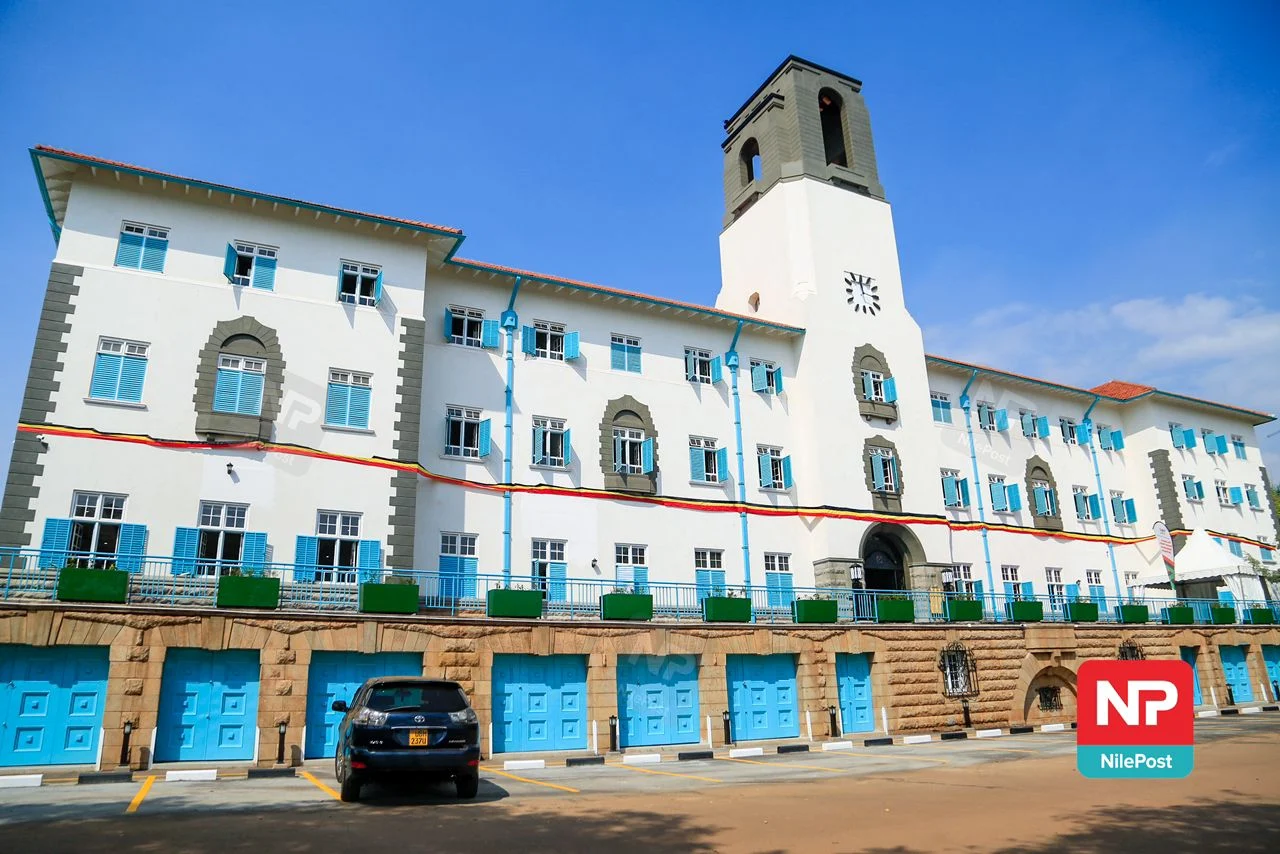
Makerere University is among institutions flagged for urgent support, with lawmakers backing additional funding of Shs1.269 billion for renovation of water and sewage systems, as well as student residences including Welcome Trust, New Avenue, and Quarry Flats.
The university has also requested Shs 7.55 billion to outsource cleaning and security services.
The institution plans to admit and graduate at least 24,000 students, supervise 200 PhD candidates, and expand digital learning under a $12.2 million programme supported by the Government of South Korea through KOICA.
It will also continue implementing the Makerere Research and Innovation Fund with Shs 20 billion allocated for research, alongside rehabilitation of teaching laboratories and provision of reagents for STEM programmes.
Makerere University Business School (MUBS) targets registration and examination of about 30,000 students, development of five new academic programmes, and transition to competence-based learning by 2027.
The institution also plans to recruit 86 teaching and 30 non-teaching staff, while supporting staff development across PhD, Masters, and other academic levels.
Kyambogo University has been recommended Shs 28.58 billion to boost staffing from the current 34 percent, amid concerns over land ownership disputes involving the Kampala District Land Board, Buganda Kingdom, and encroachers.
Parliament directed the Uganda Land Commission and Ministry of Lands to conduct a comprehensive land audit.
The university aims to serve 31,000 undergraduates, admit 18,000 and graduate 12,000 students, while investing in research, road upgrades, and construction of a perimeter wall.
Mbarara University of Science and Technology (MUST) is set to receive Shs35.43 billion to raise staffing levels in critical STEM programmes from 26.6 percent to 50 percent, alongside Shs491 million for salary harmonisation of non-teaching staff.
However, a funding gap remains in laboratory retooling, with only Shs 700 million allocated against a requirement of Shs3.5 billion.
Busitema University, which has the lowest staffing level at just 10 percent, requires Shs 14.862 billion to improve staffing, Shs15 billion for infrastructure, and Shs5.23 billion for laboratories and ICT upgrades.
The university also plans to commercialise innovations and expand agro-ecology projects.
Lira University is seeking Shs5 billion to address staffing challenges, currently at 22.2 percent, and to support infrastructure development including academic buildings, roads, and ICT systems.
Kabale University plans to expand value addition initiatives such as yoghurt, ice cream, and potato products, while enhancing laboratories and digital learning infrastructure.
Soroti University aims to scale up enrolment, research, and engineering innovation, alongside construction of teaching facilities.
Gulu University is focusing on completing major infrastructure projects, including the Business and Development Centre, Senate Building, and Moroto campus, while aligning programmes with competence-based education standards and preparing facilities for Afcon 2027.
Mountains of the Moon University plans to expand enrolment, complete its lecture complex, and operationalise a public-private partnership project, alongside improving its yoghurt processing plant.
Parliament underscored that staffing levels in some universities remain as low as 19 percent, significantly affecting teaching quality and institutional performance.
Lawmakers warned that failure to address these gaps will continue to undermine higher education standards and called for urgent investment in recruitment, infrastructure, and learning resources.
